
Knowllence’s methodological software TDC Suite is now known as Robust Engineering Software. This suite addresses the “methodological” angle of design programs with functional analyses, FMEAs, and fault trees.
It integrates a collaborative database that centralizes and structures the “Design” data.
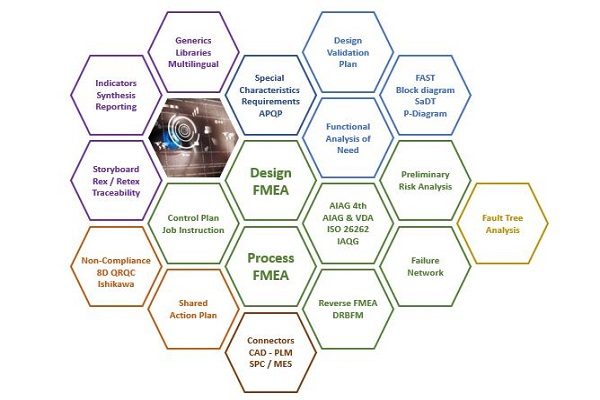
Functional analysis & Design/Process FMEA
A software suite for robustness in design
This software suite for designing new products/processes allows you to incorporate your customers’ stated ambitions, integrate needs and internal obligations, and identify and resolve any associated risks.
Advantages include:
- Capturing, structuring, and ensuring the coherence of the design data throughout the entire design process
- Saving lots of time while running meetings and for updates
- Modular tools allow compliance with reference documents
- Benefiting from know-how through cumulative, generic studies
- Ensuring traceability for each datum (and not just the document)
- Finding CAD plans easily in the FMEAs
- Creating an interface with your IT system (for example, management of action plans with Action Facilitator, management of non-compliances with TEEXMA for Quality, SPC, tolerancing, managing requirements, PDM, etc.)
- Directing project team activity, being in charge of indicators, and automatically generating summary and statistical documents
Functional Analysis of Needs
Functional Performance Specifications (FPS)
The Need program helps you integrate your customers’ viewpoints, structure the real needs through the Functional Analysis of Needs (external functional analysis), and create the Functional Performance Specifications (FPS).

FMEA software
Design FMEA/Process FMEA Risk Analysis
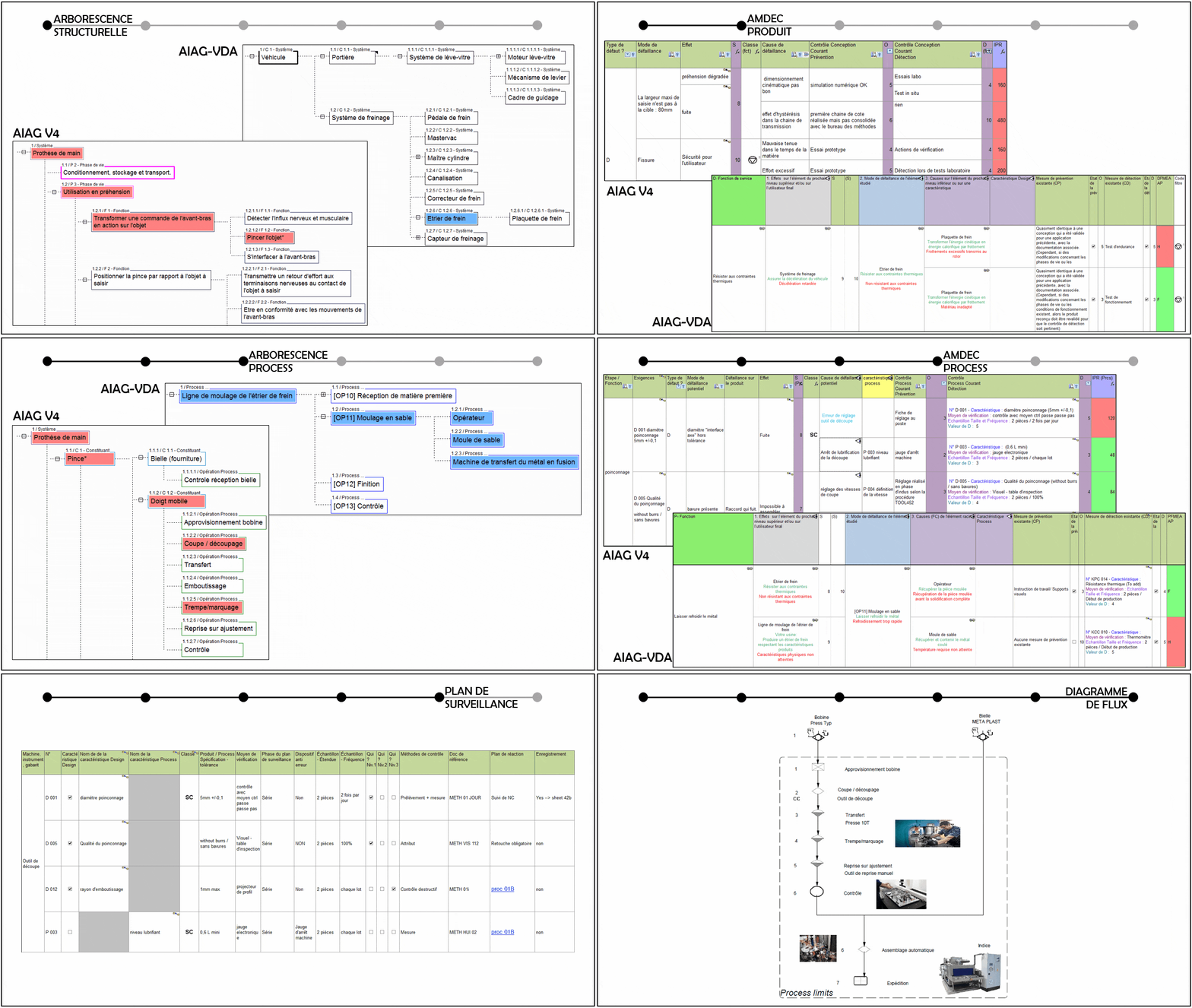
The FMEA software structures all the data implicated in the Design/Process FMEA studies: link between Design and Process FMEAs, flow chart, inspection plan, control plan, special characteristics, etc.
Technical Functional Analysis
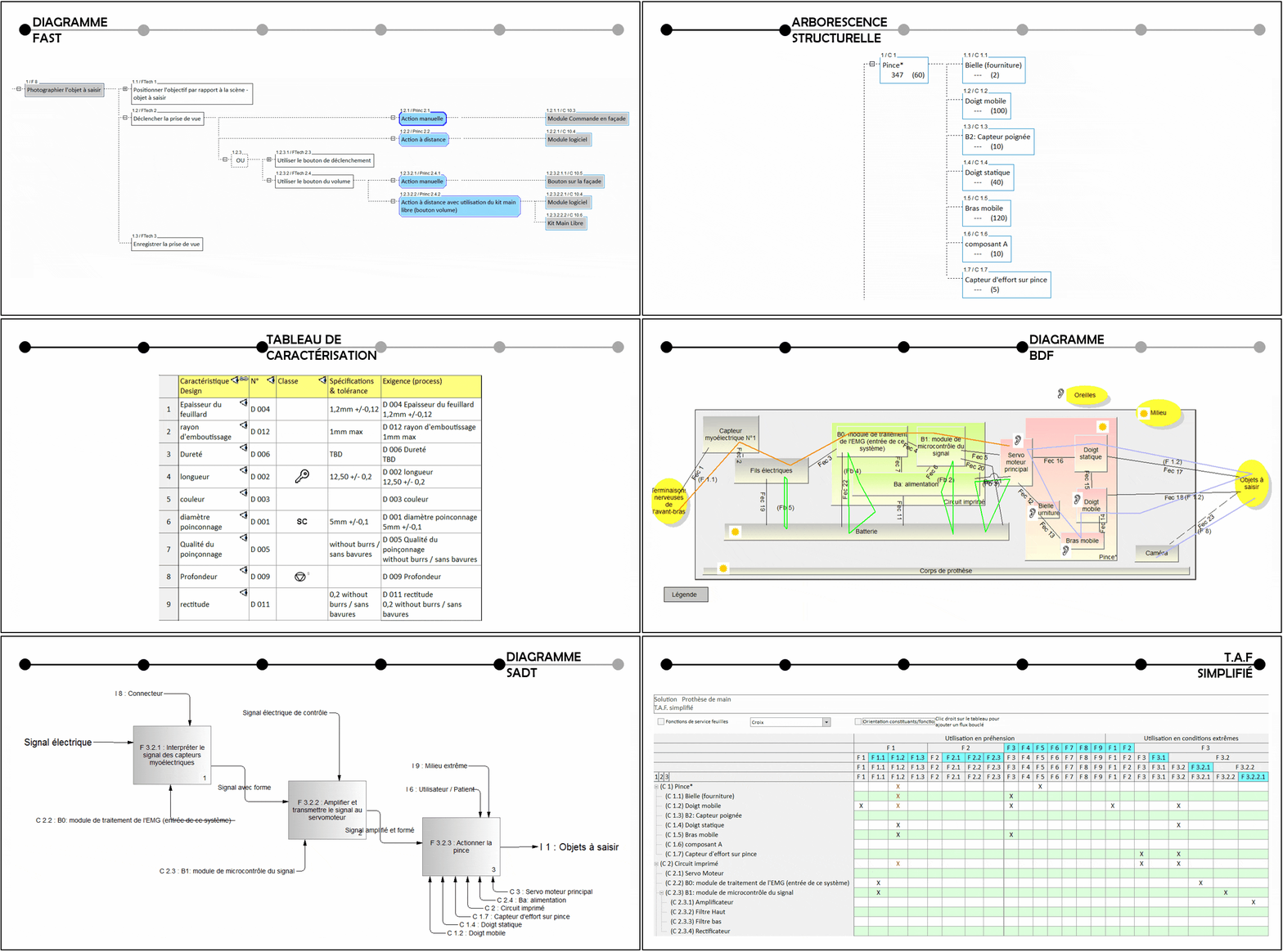
(Functional block diagrams (FBD), FAST, SADT, Functional analysis charts)
The Structure program optimizes (re)design using Technical Functional Analysis (technical specifications) and the creation of functional block diagrams, FAST and SADT diagrams, and functional analysis charts.
Fault tree software
The FTA program creates fault trees and carries out the calculations that stem from them regarding availability, accuracy, maintainability, and dependability.
Several FMEA parameters are available, depending on if you would like to use the AIAG 4th Edition format or the AIAG & VDA reference documents.
Coherence of the design process
The coherence of the methodological data is ensured within the Robust Engineering Suite database through knowledge sharing between the various tools throughout the design process—from the product to the process:
- Within the FMEA software module: between the Design FMEA (DFMEA), Process FMEA (PFMEA), DRBFM, Control plan, Manufacturing flow diagram, Reverse FMEA and Special features, etc.
- With a global approach starting with design using the functional analyses to carrying out a “correct” and complete methodological FMEA study, the FMEA tool shares pertinent information:
- The functional tree and the function characteristics generated in the Functional Analysis of Needs program Need
- The service functions and technical functions identified in the FASTs, functional block diagrams, and SADTs managed in the Structure program and summarized in the Functional Analysis Chart
- The Preliminary Risk Analyses (PRA) and the Design FMEA are the starting point for the fault trees (FTA)
- The process occurrence statistics and the links to the causes of malfunction can be retrieved from your non-compliance management or production monitoring solutions (SPC) to enhance the Process FMEA studies (dynamic connector).
Robust Engineering Software is a set of interconnected, modular programs developed by our team in France.
Knowllence has been honoured with the BPIFrance Excellence label for several years in a row for this innovated software suite that is used by businesses – big and small – in all sectors across the globe. The suite is delivered turnkey and can be adapted to your specific reference documents and how your teams work.
What are the advantages of specialized FMEA software compared to a manual analysis or an Excel-based approach ?
Dedicated software such as Robust Engineering Software ensures a level of rigor and consistency that is impossible to maintain manually.
The main benefits include :
- Full traceability : functions, causes, effects, and actions remain automatically linked.
- Fewer errors : criticality calculations and updates are automated, and indicators are continuously up to date.
- Improved collaboration : R&D, quality, industrialization, and production teams share the same information.
- Time savings : the tool structures data, avoids duplicate entries and multiple versions, and facilitates the management and enrichment of generic data and libraries.
- Greater product robustness : design quality remains more stable over time.
In summary, while Excel can serve as a temporary solution, specialized software provides real security for design quality, collaboration, and knowledge management.
Who is Robust Engineering Software designed for ?
It is intended for industries where product and process risk control is critical, such as automotive, railway, aerospace, medical devices, mechanical engineering, electronics, mechatronics, special machinery, and more.
The functions typically involved in its use include :
- R&D engineers and designers,
- Product and process quality managers,
- Methods and industrialization teams,
- FMEA leaders,
- Project managers and product managers.
Any organization seeking to structure its design process, improve product reliability, and reduce defects and non-conformities will benefit from using software such as Robust Engineering Software.
What analyses can be performed with Robust Engineering Software ?
The software covers all the analyses required for robust design, including :
- Functional analysis (Functional Specifications / CdCF), requirements, technical functions, FAST
- Value analysis and value management
- Functional block diagrams and boundary block diagrams
- Product and process FMEA, including function and failure networks
- Control plans / monitoring plans
- Functional safety in compliance with ISO 26262 : HARA, FMEDA, MSR FMEA
- Reverse FMEA
- Process flow diagrams
- Fault tree analysis (FTA)
High-performance management of libraries and cumulative generics is integrated, with multilingual support.
The key advantage is that all these data are shared and interconnected: indicators are continuously updated, inconsistencies between FMEA studies and all other design and manufacturing documents are avoided, and you are audit-ready at any time.
What determines the price of FMEA software for product and process risk management ?
- The price depends on several factors:
- Functional scope: functional analysis, Product FMEA, Process FMEA, control plans, etc.
- Number of users
- Selected standards and frameworks: AIAG 4th Edition, AIAG-VDA, Control Plan, IAQG, functional analysis, ISO 14971
- Customization and configuration needs based on the selected standards: specific indicators, role-based forms, etc.
- Hosting option: SaaS/Cloud or on-premises installation
- System integrations: PLM, ERP, MES, document management systems
- Change management: training, migration of existing data (Excel or other software), methodological support, and assistance in setting up generics and libraries
What is the best software for performing an FMEA study ?
There is no single “best” universal software: the right tool is the one that truly fits your methodology, quality requirements, and digital maturity. Key criteria to compare include:
- Compliance with the selected standards : AIAG 4th Edition, AIAG-VDA, Control Plan, IAQG, functional analysis, ISO 14971
- Ease of use, even for occasional users
- Collaboration features and role-based access management, ensuring each user has the right level of visibility
- Efficiency in managing generic studies and libraries, which is essential for knowledge capitalization from one project to another, from one site to another, including at a global level
- Interoperability with your systems (PLM, ERP, quality systems)
The right tool must be powerful, compliant, scalable, and truly adopted by your teams on a daily basis.
This is exactly what KNOWLLENCE offers with Robust Engineering Software : see customer testimonials >> https://www.knowllence.com/en/customers
Can existing FMEA studies be recovered in Robust Engineering Software ?
Yes this is actually one of its key strengths. We can recover and import your existing FMEA analyses (Excel files, competing software, internal macros, etc.) and transform them into reusable studies, libraries, and generics.
Your teams save time and work more efficiently by not starting from scratch, which greatly facilitates user adoption and deployment.
Over time, you build a true technical knowledge base that accelerates your development cycles.